

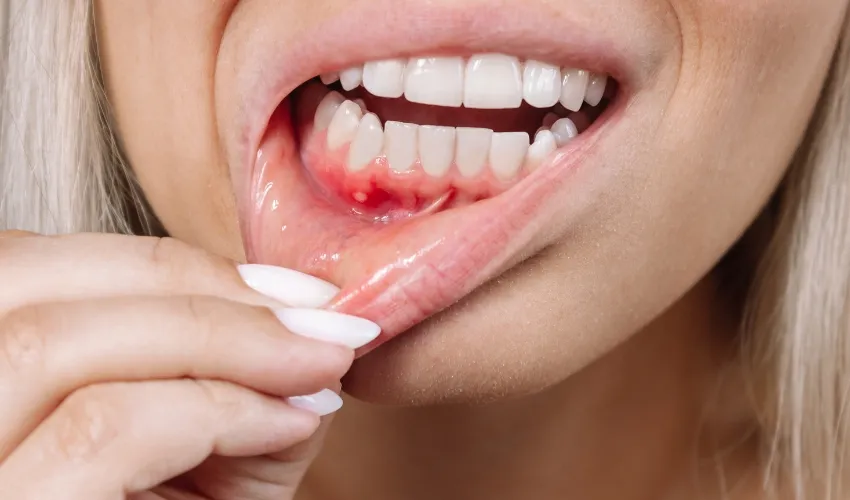
Mouth ulcers (also called canker sores) are small but spectacularly painful. They show up at the worst times—making eating, drinking, and even talking uncomfortable. The good news: most heal on their own within 7–14 days, and the right natural remedies can significantly speed that up and reduce pain in the meantime.
If you are looking for how to cure mouth ulcers fast naturally, the most effective methods focus on reducing inflammation and protecting the sore from irritation. The fastest natural ways to heal mouth ulcers include salt water rinses to kill bacteria, honey application for its antimicrobial properties, aloe vera gel to soothe the tissue, and clove oil for its natural numbing effect. Used consistently, these can visibly reduce pain and size within 24–48 hours.
What Are Mouth Ulcers?
Mouth ulcers are shallow, oval-shaped sores that appear on the soft tissue inside the mouth – on the cheeks, gums, tongue, lips, or soft palate. They’re usually white or yellow in the center with a red border.
They’re not contagious and in most cases aren’t serious – but they are painful, especially when eating acidic or salty foods.
Common Triggers
| Trigger | Detail |
|---|---|
| Minor injury | Biting cheek, sharp food, dental work |
| Stress | One of the most common triggers |
| Hormonal changes | Often flare around menstruation |
| Nutritional deficiencies | Low iron, B12, folate, or zinc |
| Acidic foods | Citrus, tomatoes, pineapple |
| Toothpaste with SLS | Sodium lauryl sulfate is a known irritant |
| Food sensitivities | Particularly gluten in some people |
| Immune system issues | Recurrent ulcers may indicate an underlying condition |
Natural Remedies That Work
1. Salt Water Rinse
Simple and effective. Salt draws moisture from the ulcer, reducing swelling and creating an inhospitable environment for bacteria.
How to use: Dissolve 1 teaspoon of salt in a cup of warm water. Swish for 30-60 seconds, then spit. Repeat 3-4 times daily.
Expect some initial stinging – that’s normal. Healing time can be reduced by 1-3 days with consistent use.
2. Honey
Raw honey – particularly Manuka honey – has proven antimicrobial and wound-healing properties. Applied directly to the ulcer, it keeps the area moist, reduces bacteria, and soothes inflammation.
How to use: Dab a small amount of raw honey directly onto the ulcer with a clean fingertip. Reapply 3-4 times daily, especially after meals. Leave it on as long as possible before eating or drinking.
3. Aloe Vera Gel
Aloe vera contains compounds that reduce inflammation and promote tissue healing. Its soothing, cooling effect also provides near-immediate relief.
How to use: Apply pure aloe vera gel (from the plant or a preservative-free gel) directly to the ulcer 3 times daily. Rinse mouth first so the surface is clean.
4. Clove Oil
Clove oil contains eugenol, a natural analgesic and antimicrobial agent. It’s one of the fastest pain relief options available without medication.
How to use: Mix 1-2 drops of clove essential oil with a carrier oil (like coconut oil). Apply with a cotton swab to the ulcer for 1-2 minutes. Use once or twice daily. Do not swallow.
5. Baking Soda Paste
Baking soda neutralizes the acidity in the mouth, which helps reduce pain and may speed healing.
How to use: Mix a small amount of baking soda with enough water to form a paste. Apply directly to the ulcer and leave for 1-2 minutes before rinsing. Use 2-3 times daily.
6. Coconut Oil
Coconut oil has anti-inflammatory and antimicrobial properties. It creates a protective coating over the ulcer, reducing irritation from food and drink.
How to use: Apply a small amount of virgin coconut oil to the ulcer with a cotton swab. Leave it on – it doesn’t need to be rinsed off.
7. Chamomile Tea Rinse
Chamomile contains compounds with anti-inflammatory and antiseptic properties. Using cooled chamomile tea as a mouth rinse can reduce pain and swelling.
How to use: Brew a strong chamomile tea, let it cool, and use it as a mouth rinse for 1 minute, 3 times a day.
8. Ice
For acute pain relief, holding a small piece of ice directly against the ulcer numbs the area quickly. It won’t speed healing, but it does provide immediate, temporary relief.
What to Eat and Avoid While You Have a Mouth Ulcer

Avoid:
- Citrus fruits and juices
- Tomatoes and spicy foods
- Crunchy foods (chips, crackers) that can scratch the area
- Hot beverages
- Salty snacks
Eat more of:
- Soft, cool foods (yogurt, smoothies, mashed vegetables)
- Foods rich in B12 and iron (eggs, leafy greens, meat)
- Probiotic foods to support immune function
Supplements That May Help Prevent Recurrence
If you get mouth ulcers regularly, deficiencies in these nutrients are often behind it:
| Nutrient | Why It Matters |
|---|---|
| Vitamin B12 | Low levels strongly linked to recurrent ulcers |
| Iron | Deficiency impairs mucosal healing |
| Folate | Supports tissue repair and immune function |
| Zinc | Wound healing and immune response |
| Vitamin C |
When to See a Doctor
Most mouth ulcers don’t need medical attention. But see a doctor or dentist if:
- An ulcer lasts more than 3 weeks
- It keeps growing in size
- You have multiple ulcers appearing at the same time repeatedly
- The ulcer is painless (a painless ulcer is more concerning than a painful one)
- You have difficulty eating or swallowing
- You have ulcers alongside joint pain, eye inflammation, or skin issues (could indicate systemic conditions like Behçet’s disease or Crohn’s)
Bottom Line
Most mouth ulcers heal on their own – but honey, salt water, and aloe vera can meaningfully speed up the process and reduce pain. If ulcers are a frequent visitor, check your nutrient levels and consider switching to an SLS-free toothpaste. Consistent recurrence is worth a medical conversation.

