

Anterior pelvic tilt exercises are essential for correcting a postural imbalance where the pelvis drops forward, often caused by prolonged sitting. To fix this “arch” in the lower back, physical therapists recommend a routine of hip flexor stretches, glute bridges, and “planks” to strengthen the core. Consistently performing these movements helps realign the spine and reduces the forward-protruding belly look associated with APT.
The good news: anterior pelvic tilt is correctable with consistent targeted exercises. A combination of strengthening weak muscles (glutes, core, hamstrings) and stretching tight ones (hip flexors, lower back) typically shows visible improvement within 4-8 weeks.
Do You Have Anterior Pelvic Tilt?
The quick self-test:
Stand sideways in front of a mirror in a relaxed position. Look at your hip bones (front) and your lower back.
| What You See | What It Means |
|---|---|
| Lower back has a significant arch; belly tilts forward | Likely anterior pelvic tilt |
| Pelvis relatively level; back moderately curved | Normal posture |
| Flat or tucked lower back | Posterior pelvic tilt |
Why Anterior Pelvic Tilt Happens
| Tight Muscles | Weak Muscles |
|---|---|
| Hip flexors (iliopsoas) | Glutes (especially gluteus maximus) |
| Lower back (erector spinae) | Deep core (transverse abdominis) |
| Rectus femoris (quad) | Hamstrings |
Extended sitting tightens hip flexors while allowing glutes and core to become underactive. The imbalance tilts the pelvis forward.
The Essential Anterior Pelvic Tilt Exercise Routine
Perform this routine daily or 5 days/week for best results.
Part 1: Stretching (Release Tight Muscles)
1. Kneeling Hip Flexor Stretch
- Kneel on one knee, other foot forward (lunge position)
- Tuck pelvis under (flatten the arch) and lean forward gently
- Hold 30-45 seconds each side | 3 sets
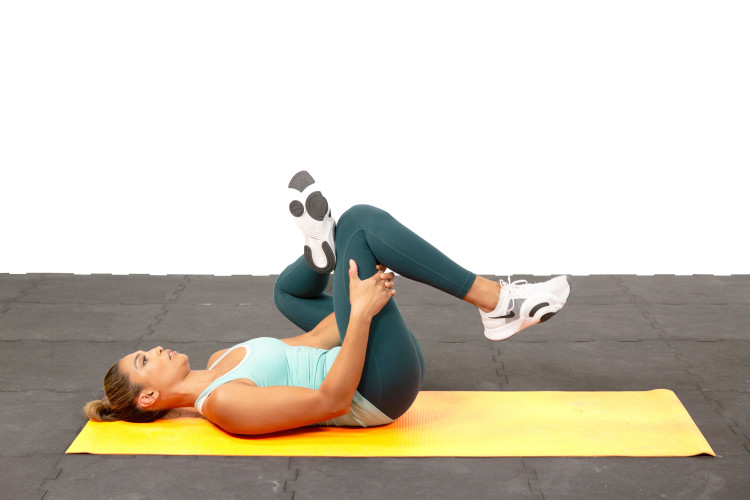
2. Supine Figure-4 Stretch (Piriformis)
- Lie on back, cross one ankle over the opposite knee
- Pull the uncrossed leg toward chest
- Hold 30 seconds each side | 3 sets
3. Child’s Pose
- Kneel, sit back toward heels, arms extended forward
- Hold 30-60 seconds | 3 sets
Part 2: Core Strengthening
4. Dead Bug
- Lie on back, arms extended to ceiling, knees bent at 90°
- Slowly lower opposite arm and leg toward floor without letting lower back arch
- 10 reps each side | 3 sets
5. Pelvic Tilts
- Lie on back, knees bent, feet flat
- Flatten lower back into the floor by contracting abs and tilting pelvis
- Hold 3-5 seconds, release | 15 reps | 3 sets
- *This is the foundational APT exercise – feel the difference between arched and flat*
6. Plank (Posterior Tilt Emphasis)
- Standard plank position
- Actively tuck pelvis under (don’t let lower back sag)
- Hold 20-40 seconds | 3 sets
Part 3: Glute Strengthening
7. Glute Bridge
- Lie on back, feet flat, knees bent
- Drive heels into floor and raise hips until body forms a straight line
- Squeeze glutes hard at the top | Hold 2 seconds
- 15 reps | 3 sets
8. Clamshells
- Lie on side, knees bent and stacked, feet together
- Rotate top knee upward (like a clamshell opening) while keeping pelvis still
- 15-20 reps each side | 3 sets
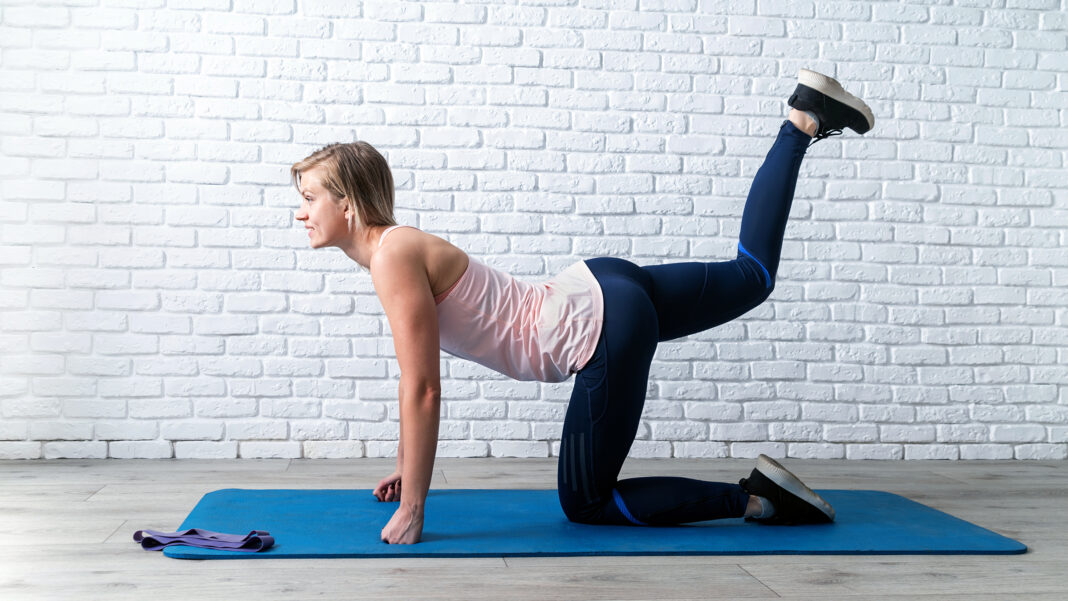
9. Donkey Kicks
- On hands and knees, kick one leg back and up, squeezing glute at top
- Keep lower back neutral throughout
- 15 reps each side | 3 sets
Exercises to Avoid (Until APT Improves)
| Exercise | Why It Worsens APT |
|---|---|
| Heavy deadlifts (poor form) | Can increase lower back arch if form breaks |
| Sit-ups / crunches | Strengthen hip flexors, which worsen APT |
| Hip flexor dominant cardio (cycling, running with tight form) | Increases hip flexor tightness |
Progress Timeline
| Timeframe | What to Expect |
|---|---|
| Week 1-2 | Increased body awareness; some muscle soreness |
| Week 3-4 | Hip flexors noticeably less tight; glutes activating better |
| Week 6-8 | Visible posture improvement in mirror |
| Month 3+ | Corrected resting posture; reduced lower back pain |
The Bottom Line
Anterior pelvic tilt exercises work by addressing both sides of the imbalance – releasing tight hip flexors and lower back while strengthening weak glutes and core. Consistency matters more than intensity. Do the routine daily, check your posture throughout the day (especially when sitting), and consider working with a physiotherapist if you have accompanying back pain.

